

Reflections from the field: Getting on the same team

Updated: May 18, 2020
Imagine the situation: You approach a person of interest and, eyes gleaming with the naivety of a new postgraduate research student, excitedly exclaim “Hi there! I’m a researcher from [insert university here], and I’d love to be able to chat with you about ______”. At the word “researcher”, that person of interest drops the smile, gets all shifty eyed and looks for an escape, mumbling “how interesting…” or “best of luck….”. Maybe you set up a time for an interview, or maybe you don’t because they are blessed with the perfect excuse. Either way, you leave with an unsettled feeling in your gut.
Sound familiar? If not, you’re one of the lucky ones. When approaching conservation professionals, I’ve had countless experiences like this (not to mention all the unanswered emails).
These frustrating and demoralizing experiences over the past two years as a master’s student have brought up so many questions. Mainly, why are student researchers so often undervalued and overlooked by conservation professionals? You can’t make it through a week in the conservation sector without hearing, “there’s just so much to do and so few resources!” and “it’s all about collaboration and partnership!”. From the perspective of a master’s student, who can’t really be paid for their research anyway, this seems like the perfect fit. Partnering up with practitioners or organizations ensures that:
1) Our research is actually useful,
2) We gain valuable experience while our student loans can support us financially, and
3) Organizations that are stretched too thin get free support from willing and enthusiastic students.
With benefits for both sides, why isn’t this collaboration as easy as it sounds?
The most common answer I hear is that people are too busy to add an interview or email response into their schedules, so finding time for student partnerships is even less likely. While this may be true, there’s always more to a story. I’ve been exploring two pieces of that story: the reputation of researchers, and the ethics of research in general. These are both very specific to my experiences and a list of two is never exhaustive, but I hope that this will, at least, serve as a conversation starter.
Reputation of Researchers
Beyond people expressing that they are “so sick of researchers”, I had an interesting encounter with a potential interviewee, who cautiously expressed their hesitations with being interviewed for my research. The conservation practitioner mentioned that so many researchers come to the country, write negative things about their work, and usually do so without even speaking to anyone working on the project. This interaction brings up two perceptions of researchers that, while not wholly representative of all researcher-interviewee relationships, are important to reflect on:
1) Researchers coming to conclusions based on unbalanced and negative research, and
2) The lack of effort some researchers put into forming local connections (whether that’s taking the time to contact organizations, embed your research into larger action/work on the ground, engaging with locals etc.).
Of course, we have to return to the original point: did the organization(s) just never respond to the researcher’s attempts at connecting, or did the researchers never even try? In my case, it seemed the interviewee’s hesitation to participate and respond came from a concern that the research would undermine the efforts of the practitioners. Fortunately, I was able to assuage these concerns because the research I’m conducting is intentionally designed not to do this. Once I started talking to them about the research I was doing, they realized I wasn’t out to get them.
From my experience, the underlying issue seems to be that people are wary of engaging with researchers because we sometimes tend to fixate on the problems without doing justice to the contexts and trade-offs that produced them. I’ve definitely been guilty of this. It can be much easier to theoretically pick apart CBNRM (community-based natural resource management) or women empowerment initiatives than it is to actually deal with the complexity of implementing it on the ground, trade-offs and all. That being said, it’s obvious that the best work comes from acknowledging and addressing these problems and “failures”. So, what’s a good balance between the two? Maybe we need to find a better way to communicate feedback from the academic world to the practical world. Or maybe practitioners could make more of an effort to include researchers in their schedules and operations. It’s a hard discussion to have without getting defensive, right?
Ethics
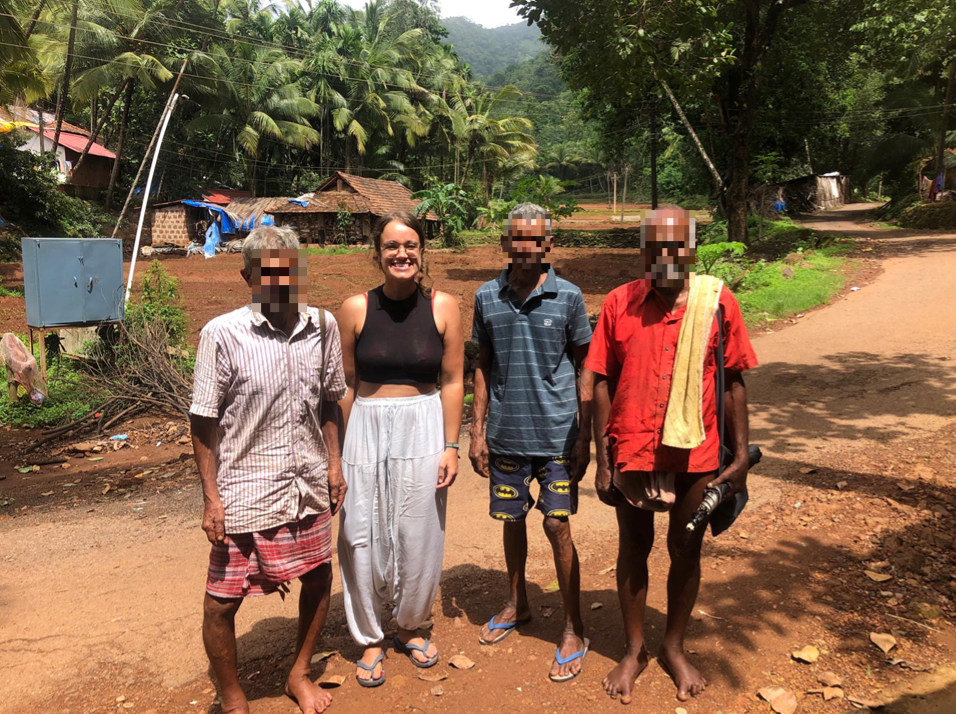
Embedded within this discussion is an ethical quandary most researchers in my position come to terms with at some point: the reality of being a relatively well-off, white, highly educated, privileged person undertaking research in a foreign context. And in my case, with only two weeks (total) in said context under my belt. The simple solution goes back again to how important it is to make connections on the ground where you are conducting research, whether that’s being invited by an in-country institution and/or actually getting the right visa to do research there. But beyond that, it brings up difficult questions about who should be doing what research.
I’ve personally struggled with this a lot in the past two years, trying to figure out where I fit within the big picture. There is a lot of justified pushback against the type of researchers I represent and I have to respect that. So, how to move forward from here? The answer will definitely be different for everyone, but for me it looks like approaching this research as my learning experience, rather than my ticket to becoming an “expert” in this subject. We’re often taught to “fake it ‘til you make it”, but in the case of research I’m beginning to realize the value in admitting my limitations (not to be confused with “imposter syndrome”). For me, this has been key in resolving some of that initial pushback from practitioners and has opened up a space for genuine collaborations to develop.
So in conclusion, there is no conclusion! This discussion has been and will continue to be relevant, as long as the conservation sector stays reflective about the work we do and the partnerships we make. I am by no means the first person to grapple with these topics, so I’m interested to hear your thoughts and experiences in the comments below!
Sarah Milligan


Comments