

Human-Wildlife Conflict in a Transitioning Landscape: The Story of 3 Taxonomically Distinct Species

Updated: May 18, 2020
People and wildlife have coexisted for millennia, however, the relationship between population growth, resource consumption and environmental degradation is putting pressure on natural resources leading to increased competition and therefore conflict with wildlife. This is especially problematic in developing countries such as India which have experienced phenomenal population and economic growth. The Western Ghats in India is one of the top three biodiversity hotspots in the world with the most profound risks from human pressures. Goa, the smallest state in India and the study area for this research (Figure 1), is located between two other states along the Ghats, Maharashtra and Karnataka. Its forests and functioning ecosystem are therefore vital to maintain the continuous band of this precious forested mountain range. Goa has 7 protected areas (PAs) but land use changes and infrastructure development are increasing the risk of human-wildlife conflict outside of these PAs.
Figure 1. Protected area map of Goa produced using QGIS. Protected areas are in grey, protected area focused on for this study in green and residential areas surveyed represented by blue dots. Protected area shape file provided by Gubbi et al. (2016).
A huge diversity of species are affected by human-wildlife conflicts. Each species poses significantly different risks to humans, ranging from livestock and pet depredation to crop-raiding, attacks on humans and property damage. Acknowledging the human dimensions of the problem is critical to enable us to successfully understand the broader social-ecological systems driving people’s tolerance toward damage-causing wildlife and thus allowing for more successful applications of management measures. Furthermore, humans have the propensity to value animal species differently based on attributes such as size, attractiveness, danger, rarity, bio-behavioural similarity to humans and symbolism. This research investigated how conservation practitioners can manage multiple, taxonomically distinct, ‘problem’ species in the rapidly transforming/fragmented landscape of Goa. Focus species of this study include; Indian Leopard, Hanuman Langur and Indian Cobra from the carnivore, primate and reptilian taxonomic groups.
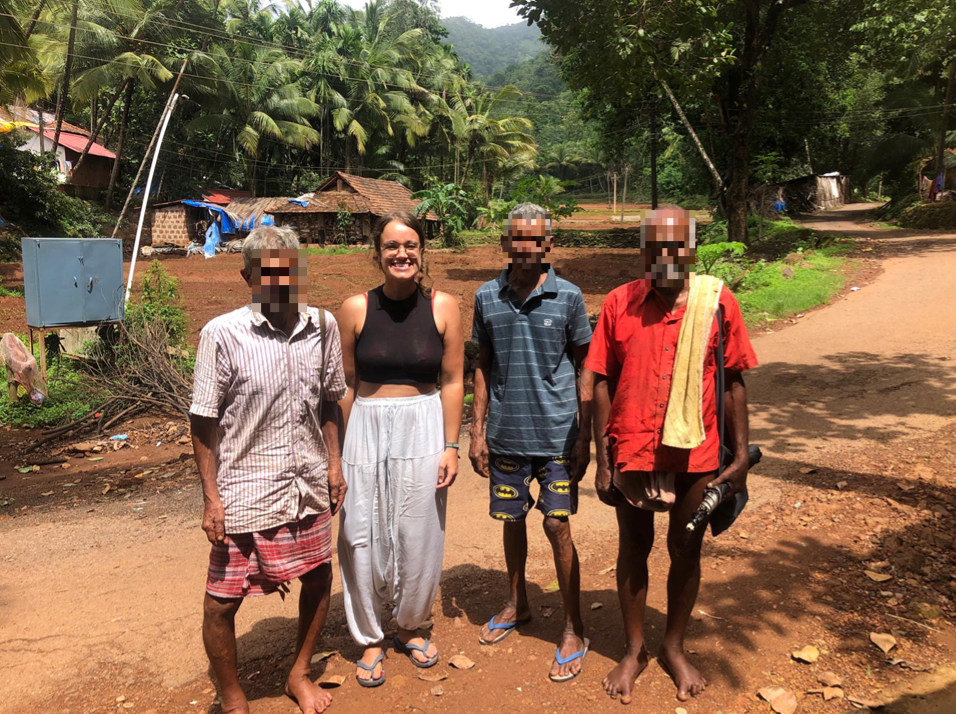
Data was collected through 128 resident interviews outside Cotigao Wildlife Sanctuary (Figure 1) which were analysed using Partial Least Square Structural Equation Modelling (PLS-SEM) according to Kansky’s Wildlife Tolerance Model (WTM) applied in this study. This theoretical framework is made up of the Outer Model which predicts that exposure and experiences affects perceptions of costs and benefits and in turn these costs and benefits drive tolerance. The Inner Model considers other factors that may affect tolerance further like empathy (Figure 2).

Figure 2. The Wildlife Tolerance Model proposed in Kansky et al. (2016)
Results:
Higher levels of exposure to a species equated more perceived tangible and intangible costs to humans. This theme was consistent across the three taxonomically distinct focus species of this study. For both leopards and langurs, tolerance was negatively affected by higher levels of perceived intangible costs. By minimising residents contact with leopards and langurs, wellbeing amongst the local people could be improved alongside the preservation of ecologically significant species. This can be achieved through making villages and agricultural land less attractive to these species. However, this was not the case for cobras where none of the WTM outer model variables impacted tolerance including tangible and intangible costs and benefits. This finding has not been observed in any previous applications of the WTM. The WTM has also never before been used to study human-wildlife conflict with reptiles and so this research was exploratory in its application to this taxonomic group. See figure 3 for models.
Figure 3. WTM Outer Model Constructs can be seen to the left of tolerance (TOL). Inner Model Constructs can be seen to the right of tolerance (TOL). Lines joining the circles are path coefficients linking the variables. Bold lines represent significant path coefficients which show they are a strong driver of the construct they are linking to and broken lines non-significant path coefficients.
Leopards:
Leopards like human habitations because their natural prey is attracted to crops grown on agricultural land, the irrigated land provides drinking water and significantly, domestic animals provide easy prey opportunities. Dogs are regularly tied up outside properties which attracts leopards which are extremely adaptive predators. More than 70% of respondents claimed they worried about the safety of their pets and family with over 200 incidents of leopard attacks on pets in 2018 recorded through this study. Despite this, results also showed intangible benefits were seen to be a positive driver of tolerance towards leopards as they predate on other crop raiding problem species like langurs. Therefore, current reactive translocation practices, which have been shown to not be an effective management tool for dealing with stock-raiding leopards, are avoidable. Leopards need to be discouraged from people’s houses, not the general area. This can be done through intense community engagement techniques to change attitudes towards animal husbandry and encourage residents to keep their dogs inside at night, or avoid keeping dogs entirely where leopards are known to regularly roam.
Langurs:
Two of the main intangible costs perceived for langurs related to time spent protecting crops. The opportunity should be taken to look toward results from the leopard model for solutions to make agricultural land less appealing to langurs. A previous study in western Maharashtra, India, reported an almost complete dependence of leopards on domestic animals as prey in the crop lands. Through the reduction in the availability of domestic prey in human habitation we could see an increase in predation upon other problem species, like langur. Moreover, can a leopard be simulated in some way to discourage langurs from visiting certain fruiting trees at particular times of the year? Steps have already been taken by researchers towards sensor-based solutions for reduction of human-wildlife conflicts within agriculture. This can include visual cues, bioacoustics and AI which can ensure highly intelligent primates do not become habituated to the concept. Technological solutions have an increasingly important role in helping conservationists protect wildlife and people’s livelihoods.
Cobra:
Snakes possess a high status in Hindu mythology with interviews revealing common beliefs shared toward cobras across the study area. Although exposure led to increased perceived intangible costs, as with leopards and langurs, residents tried to uncover why the cobras would be visiting them, looking introspectively for explanations of increased exposure rather than directly blaming cobras. Despite this, respondents are still shown to kill cobras if they enter their homes in order to protect their families.
One of the main drivers stopping people from readily killing cobras however was empathy. Zoomorphism, the attribution of animal traits to human beings, deities, or inanimate objects is ever present in Hindu theology, particularly with snakes. Zoomorphism, like anthropomorphism, attempts to reduce the otherness between humans and animals and therefore, acts as a component part of empathy in a similar way to anthropomorphism. This philosophical grounding may explain empathy as a positive driver of tolerance within the application of the WTM to cobras. But empathy needs to be facilitated. Therefore, it is unsurprising that the most significant driver of tolerance for cobras were institutions. In human–wildlife interactions, institutions provide structure and regulate relationships between stakeholders and wildlife. They can support Hindu religio-philosophical traditions through the facilitation of empathetic actions toward cobras thus propagating coexistence. The specific institution within our study area driving tolerance is an environmental conservation organisation ‘The Tribe’ who work with local communities in the study area rescuing people and snakes from one another. It is interesting the ‘The Tribe’ significantly improved tolerance but the Forest Department of Goa did not despite both institutions engaging with snake rescues in the study area. Anecdotal evidence found people highly valued ‘The Tribe’ for its availability. This is key, as after finding the snake and calling for institutional help, residents must sit with the snake to ensure they don’t lose it.
Figure 4. Focus species: Indian Leopard (Panthera Pardus Fusca), Hanuman Langur (Semnopithecus hypoleucos iulus), Indian Cobra (Naja Naja)
What does the future look like?
Management implications and future focuses for research extracted from this study include:
Human dominated landscapes need to be made less appealing to leopards by encouraging local people in problem areas to abstain from keeping dogs as pets. Alternative measures include campaigning to residents to keep their dogs inside at night.
Make human dominated landscapes less attractive to langurs. Within this context this could be conceptualized as a frightening device utilizing visual stimuli and bioacoustics to replicate leopard activity, think... AI scarecrow. Further work should be done into the generation of tech innovations to combat HWC, specifically robotics and AI.
Future challenges for cobra lay in the ability of institutions to continue engaging and supporting residents, facilitating empathy through quick response times to snake call outs and future snake handling educational programmes to allow residents to facilitate their own empathy. This will be more effective the closer the Forest Department and The Tribe collaborate to support each others hard work.
Future studies could build on the idea that empathy towards certain species is not just a derivative of anthropogenic similarities but also from zoomorphic religo-philosophical ideologies as a concept of polytheism.
In the long term the State of Goa needs to question what changes in rural land use have brought the spatial interface between humans and wildlife to human habitation. Future land use planning and infrastructure development needs to reflect ecosystem and scientific considerations to improve livelihood needs and protect ecosystem services. Thereby ensuring resource availability is balanced between human and non-human counterparts.


Comments