

Life after ConSci: One year on from graduation

We are repeatedly told that finishing you masters and entering or returning to the world of work is an exciting and prosperous time. Although indeed it can be, graduates often recall feeling overwhelmed and under prepared stepping back into the “real-world”. Despite the importance of being open and honest about graduate prospects, not just for ourselves but for future students looking for guidance, we’re rarely given the whole, truthful picture. And so within this blog, we present five honest stories encapsulating the triumphs and pitfalls of life after ConSci.
Tilda Dunn - Visiting Researcher to ICCS, University of Oxford
This time one year ago, in a panic about the financial stability of a conservation graduate, I put the conservation career dreams on hold and went back to modelling. Ironically, modelling was something I’d originally done to help pay for my masters and returning to it was a world away from the conservation degree I had been studying. I remember feeling hugely guilty and hypocritical as it was revealed my outfit for one show would include an fully plastic trench coat (my thesis had been on plastic consumption behaviours).
Returning to past jobs not related to conservation can seem like a step back - as if all that time, money and effort spent has been wasted, and just like that you’ve failed. But for me, it was an important step towards getting my life together, enabling me to move out of my parent’s flat and take on that part time research project that led me to where I am today (although I probably would have liked to have avoided that plastic coat). Balancing work has been a big struggle for me this year. It’s difficult to make sure jobs that you’re passionate about don’t end up taking over your life, running you down or becoming a priority over your relationships. It’s mostly been trial and error for me, and a lot of learning to accept my limits.
My advice to anyone looking into a career in research, is that there are a lot of uncertainties on this path, but there is also a whole community of people you can reach out to for support and guidance - I have been so lucky to have had invaluable mentoring from my supervisor Dr Diogo Veríssimo over this past year, without which I wouldn’t be working where I am now.

John Coppock
Having just finished my MSc, I found myself in Canada visiting friends and relatives. Plenty of time to reflect on, and (partially) recover from, our full-on course. I had started the Masters’ thinking that it would lead to a PhD, but it seemed from my initial research that it would be very difficult to find a funded position, so I was also considering what jobs would be suitable.
I did a little work for Andrew Terry at Durrell in Bath, but life got in the way. Andrew moved to ZSL, and I went on a long-arranged tour of NZ and Australia, with one eye on doing a doctorate there. At the same time, I was in discussion with African Parks about a PhD, which progressed on my return. Unfortunately, that was when things got difficult as my wife collapsed with no warning signs when we were out walking. After much soul searching, I decided to abandon the PhD plans as it would involve a lot of time away from Nancy (who is now fully recovered).
To make up for this disappointment I put together a couple of groups to go on safari in 2020 (which I’ve done sporadically over the last decade using experience from my years as a tour leader). It will be different (better!) with my improved conservation knowledge, but it was quite a challenge as neither of the groups wanted to camp, so I had to research and book all the lodges. Nevertheless, the tours are full and everything is reserved – success!
Looking back on the course, I’m so glad I did it. I probably should have been more realistic about the problems of looking for research and jobs while not wanting to move from Bath, but I don’t think it would affect any decisions I made. I still hope to use my knowledge to volunteer on conservation projects in the future, so it has all been worthwhile.

Leigh-Anne Bullough - Field Researcher, Lilongwe Wildlife Trust
This time last year, fresh out of my MSc at Imperial College London, I didn’t really know what I wanted to do other than ‘research’. It should have been exciting, with endless possibilities – but in reality, it was terrifying. I’d just spent all my savings and taken out extra loans to pay for my masters, and then… that was it. I knew I wanted to do more research but I didn’t fully know how I was going to get there, and so I sat at my laptop and Googled jobs in conservation. I waded through advertisements for jobs and applied to them all. Didn’t qualify? May as well try… Don’t really think it’s for me? Never mind…
The hardest thing about this tact? Rejection. It’s the thing we never talk about, that we’re ashamed of, and yet we all go through it. Scrolling through Instagram and comparing my everyday life with other people’s highlight reels really had me thinking – “was I being left behind?”
The reality is, I wasn’t. This industry is difficult to crack, but every step you take is a success – whether or not it feels like it at the time. My biggest success of this year hasn’t been the jobs I’ve held, or the lectures I’ve given, but my persistence and perseverance. That, folks, is how I ended up living in Malawi, running a research programme in a wildlife reserve. It’s easy to focus on the perceived ‘failures’ and forget about the successes – however small they may be. I’ve been invited to two conferences, spoken at ICCB 2019 in Kuala Lumpur, got funding for a field trip, been published and, most importantly, met some incredible and unforgettable people along the way.
If I could give advice to myself this time last year it would be that cultivating honest and genuine relationships with people in conservation is key. Surround yourself with people who look out for you, and don’t take them for granted. There is more to life than your career - don’t lose sight of that.

Hope Beatty - National Social Research Coordinator, Blue Ventures Madagascar
This time last year I was still in the UK and still recovering from the intense (and amazing) environment of the Imperial conservation science MSc. I was unsure about the direction of my first career opportunity I wanted to take and how pivotal this first step was going to be, caught between the interest in academia and my love for the field. I was excited and completely unexpecting of what was ahead.
There have been more than a few hurdles that I have face this year and although I am feeling proud looking back on them now, there were times where it felt I was lost with no road map available. The most difficult decision was to decide to accept a job in rural part of North West Madagascar. It was a hard decision as I was moving thousands of kilometres from friends, family and the familiar.Taking this chance to work in Madagascar and throwing myself fully into this experience. From this, I have discovered an amazing team of like-minded and passionate individuals whom I am learning from every day. Learning about new cultures, language, and way of conservation.
To throw yourself at every opportunity that presents itself. Make sure that you are not taking things for advantage and learning as much as you can. I would tell myself that everything is about a frame of mind, and if you can try to have one which includes a thirst for knowledge and skills. Try to use this time to learn and gain as much as you can from experiences and people you meet along the way, as well as supporting and helping others wherever possible.
Liv Wilson-Holt - Researcher, International Institute for Environment and Development
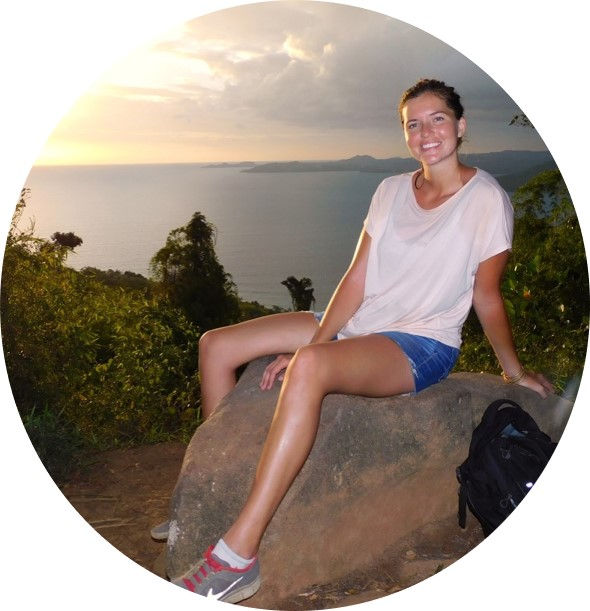
I’ve been asked a few times what advice I would give to someone beginning a Masters and it’s always: reach out to institutions you’d be interested to work for and see if they need any research doing that you could turn into a thesis. It’s a win for you – because you get to make awesome contacts and collaborate with another organisation – and for them – because they get research done for free (in my case, anyway).
Back in January 2018 I emailed my now boss at the International Institute for Environment and Development (IIED) for this exact reason. I was really interested in the work IIED were doing – their projects include strengthening equitable and just conservation and supporting community involvement in tackling illegal wildlife trade. Fortunately, they responded saying they had something in mind and my thesis ended up being on the latter. Once my MSc was up I was then lucky enough to be offered paid short-term research work, which ended up being extended. I’ve now been working at IIED for over a year as a researcher.
I primarily work on a project that aims to build evidence of community-based approaches to reducing illegal wildlife trade and to strengthen the voice and dialogue of these communities in decision making. As part of this project, in September I travelled to Lima to help out at one of our ‘Community Voices’ conferences. It was such an experience to meet people whose livelihoods and traditions depend on wildlife, and to hear how successful many of them are at protecting it.


Comments