

A deep dive into the underwater world of marine conservation with Dr Tom B Letessier

Marine biologist and Research Fellow Dr Tom B Letessier, has been working at the Institute of Zoology (ZSL) since 2014. His main interests has been on the spatial ecology of megafauna and the development technologies such as drones for Marine Protected Area (MPA) surveillance, fisheries enforcement, social drivers of illegal fisheries, and megafauna monitoring. During my year as postgrad student in conservation science at Imperial College, Tom co-supervised my IOZ project on phantom seamounts and I seized the opportunity to interview him about his experience in conservation.

Reflecting on how he embraced this career path, Tom said: “Growing up near the ocean, I have always been fascinated by this ecosystem and its fauna, and I quite naturally chose an undergraduate course dedicated to marine biology.” After graduating with bsc hons degree at the University of Aberdeen, Tom spent a year working within several NGOs on monitoring projects for remote reefs and training volunteers in performing scientific reef surveys. He then embarked on a PhD at the University of St Andrews where he studied zooplankton ecology in mid-ocean ridge environments. “After my PhD, I was offered a position as a Research Assistant Professor at the University of Western Australia, where I spent almost three years. This role entailed a lot of fieldwork, developing non-invasive monitoring systems based on baited cameras to monitor pelagic predators. One of our partners was ZSL and joining them was an opportunity to continue researching this topic while getting much closer to home.”
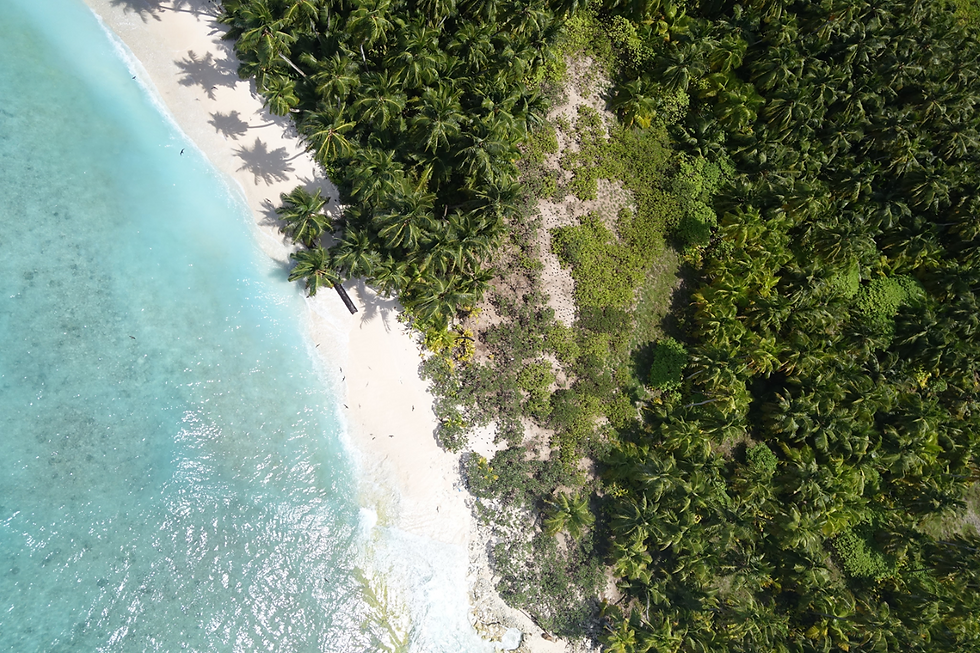
Although still involved in this area, Tom has since been branching out, working increasingly on a programme that looks to support with scientific expertise the management of large MPAs. This has led him to lead on a research project focussing on the illegal fisheries in the British Indian Ocean Territory. “BIOT is the largest no-take Marine Reserve [i.e. where no extractive activity is allowed] in the Indian Ocean and presents unique species abundance. Despite its remote location and protected status, BIOT is nevertheless targeted by illegal fishing which puts pressure on its marine wildlife and threatens its biodiversity.” Illegal fishing activities in the area mostly originate from coastal villages in India and Sri Lanka, by means of medium boats crossing over to the MPA. The research fields involved in tackling illegal fisheries are diverse and includes social research into the human drivers of the shark fisheries in addition to the applied research on how to improved enforcement and surveillance.
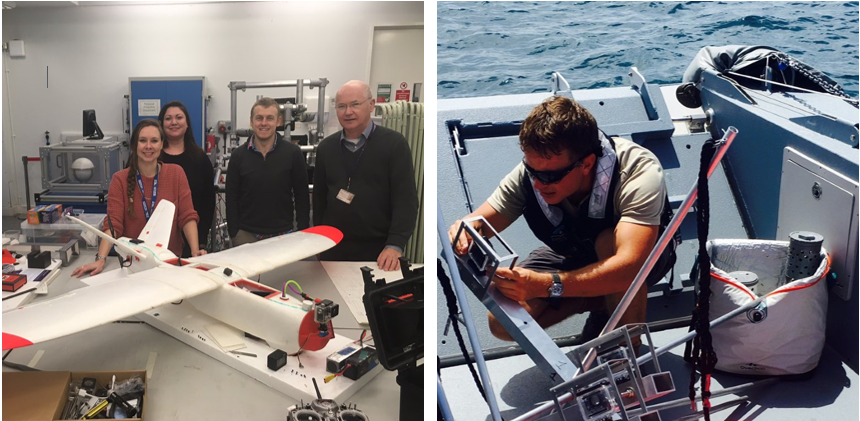
With an area more than twice the size of the United Kingdom, the surveillance of the MPA proves to be quite complicated and the risk of patrol interception is perceived to be very low by contraveners. “Illegal fishing poses serious challenges in terms of management and may compromise the integrity of the reserve. Our aim is to design and develop tools which would facilitate the detection of illegal fishing activities and therefore deterrence. Moreover, we would like for these tools to combine surveillance and ecological monitoring, extending their scope to habitat mapping and wildlife data collection.” For example, Tom has worked to develop an amphibious fixed-wing Unmanned Aerial Vehicle (UAV) that is able to water-land. The aim is for this drone to be integrated as part of the patrol assets, providing live vessel surveillance, and to be used for ecological systematic transects to survey megafauna such as turtles or rays. Another project is looking at a vessel detection system based on automated hydrophones triggered by boat engine frequencies, which could also record cetacean vocalisations.
Discussing key partnerships, Tom stresses the importance of nurturing strong relationships with the philanthropic and governmental organisations funding his work, the Bertarelli Foundation, the Monaco Exploration Society, and Marine Management Organisation. In addition, he closely collaborates with other research institutions, including the Unversity of Exeter, the University of St Andrews and the University of Western Australia where he completed his doctoral and post-doctoral works, the “université de Montpellier” in the south-east of France and several London universities with which ZSL partners. “Building and maintaining a professional network is an essential part of a researcher’s job as it allows to meet potential funders or collaborators. Besides more traditional ways such as running and attending conferences, social events or lectures, I use social media platforms to engage with people. Twitter in particular is very handy, particularly when it comes to keeping up to date with the primary literature! Finally, being mobile proved to a big advantage in the field.”
To conclude the interview, I asked Tom what he found to be the most difficult in conservation, to which he replied:
“The realisation that the world we will live in is going to be very different from the one we grew up in and not let it drag you into pessimism. Our cause is not lost, we just need to readjust our expectations!”
For more information about Tom’s work projects and publications, visit his ResearchGate page.
And if you are interested in a PhD in marine ecology and conservation, NERC London offers two topics co-supervised by Tom:

Marie Hardouin


Comments